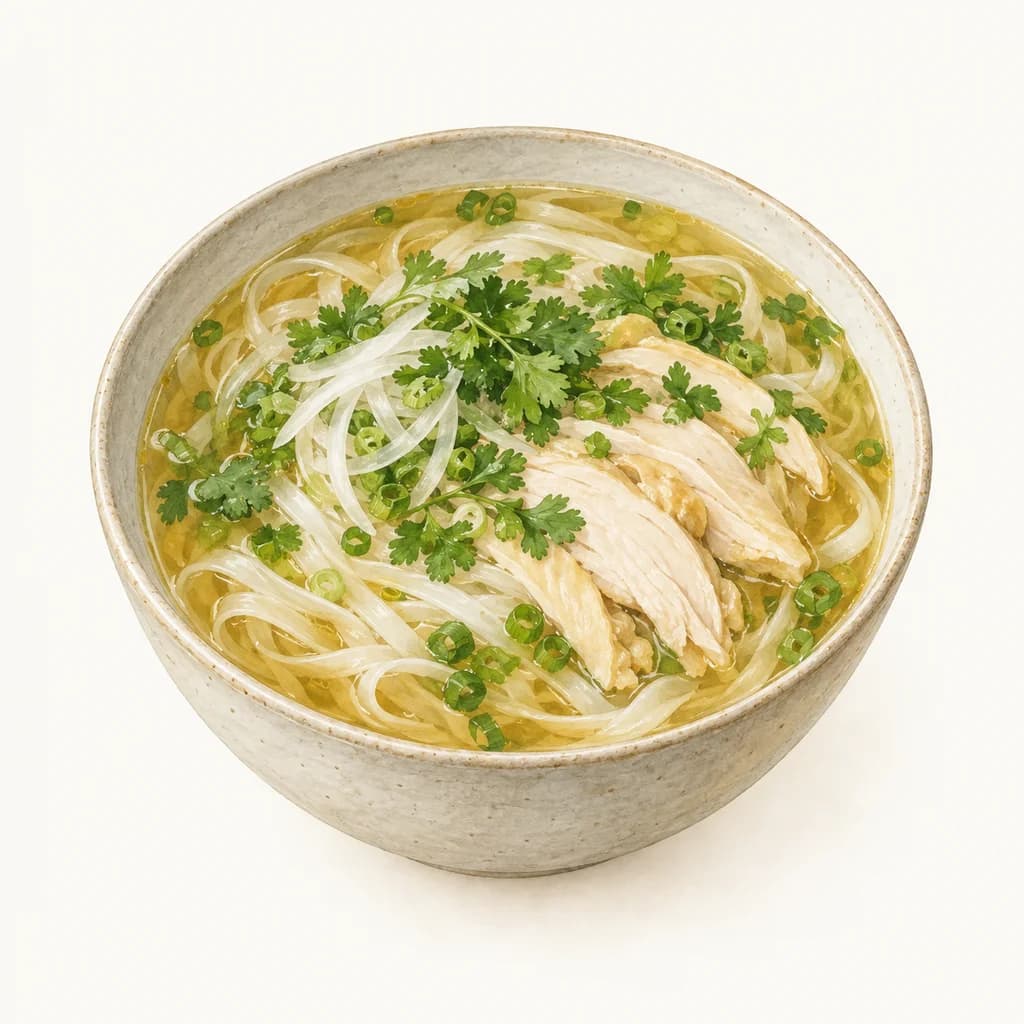
What makes a good chicken pho broth?
A good chicken pho broth tastes first of chicken, then of ginger, onion, and a restrained amount of spice. It should be savory enough to season plain rice noodles without relying on a large dose of table sauces.
Clarity is useful, but it is not the only measure of quality. A slightly cloudy broth can still be flavorful. Focus on gentle cooking, enough chicken for the water, and seasoning the finished volume.
Start with bones and meat
A whole chicken gives you broth and meat for the bowls. Bone-in legs are convenient for smaller batches. Skin and connective tissue contribute body; boneless breast alone makes a lighter stock and can overcook before much flavor reaches the water.
For our six-serving recipe, a 3½–4 lb chicken starts in 12 cups of water. The finished broth is adjusted to about 10 cups after straining. Pot width, lid position, and burner strength all affect evaporation, so final volume matters more than an exact water line at every stage.
Brown the aromatics without burning them
Halve onions and split ginger lengthwise to expose a broad cut surface. Brown them in a dry heavy skillet until they have dark patches and smell fragrant. Remove loose black flakes, which can taste bitter.
You do not need a gas flame or an elaborate smoking step. Work in a ventilated kitchen and watch the pan rather than leaving aromatics unattended.
Use a quiet simmer
Bring chicken and water slowly toward a simmer, skim the foam that collects, and then add aromatics. Look for occasional small bubbles, not a churning surface. Hard boiling disperses fat and proteins through the liquid.
Remove chicken when the breast and thigh reach 165°F / 74°C. Pull off the meat once it is safe to handle, then return the bones to continue building flavor. A longer broth cook should not mean a longer cook for the meat you plan to eat.
Strain, measure, then season
Pass the broth through a fine-mesh strainer without pressing hard on the solids. If it has reduced too far, add hot water to the recipe’s finished volume. Only then adjust fish sauce, salt, and sugar.
Taste a spoonful with a few cooked noodles. Broth tasted alone can seem assertive, yet become balanced in a complete bowl. If it tastes flat, try a small pinch of salt before adding more spices.
Troubleshoot the pot
Fix one variable at a time. A sour or spoiled smell is not a seasoning problem; do not attempt to rescue food that may have been stored unsafely.
- Too salty: dilute with unsalted broth or water; do not add sugar just to hide salt.
- Too weak: reduce the strained, lightly seasoned broth, then taste again.
- Too spicy: remove the spice bag and dilute with plain chicken broth.
- Too greasy: skim some fat, or chill safely and lift off the firm top layer.
- Cloudy: strain gently and accept the appearance; next time lower the heat earlier.
Make it ahead safely
Divide broth into shallow containers and refrigerate promptly rather than leaving a large stockpot on the counter to cool overnight. Keep chicken and noodles separate. Reheat broth and chicken thoroughly before assembling fresh bowls.
The linked recipe includes storage temperatures and times, with a food-safety reference. Freeze broth in meal-sized portions so you only thaw what you need.
Questions from the kitchen
Does chicken pho need an all-day broth?
No. Chicken gives up flavor more quickly than large beef bones. The flagship recipe takes about two hours overall, with cooked meat removed before the final bone simmer.
Should I add more fish sauce before reducing?
Wait until after reducing or topping up the broth. Reduction concentrates salt as well as flavor.