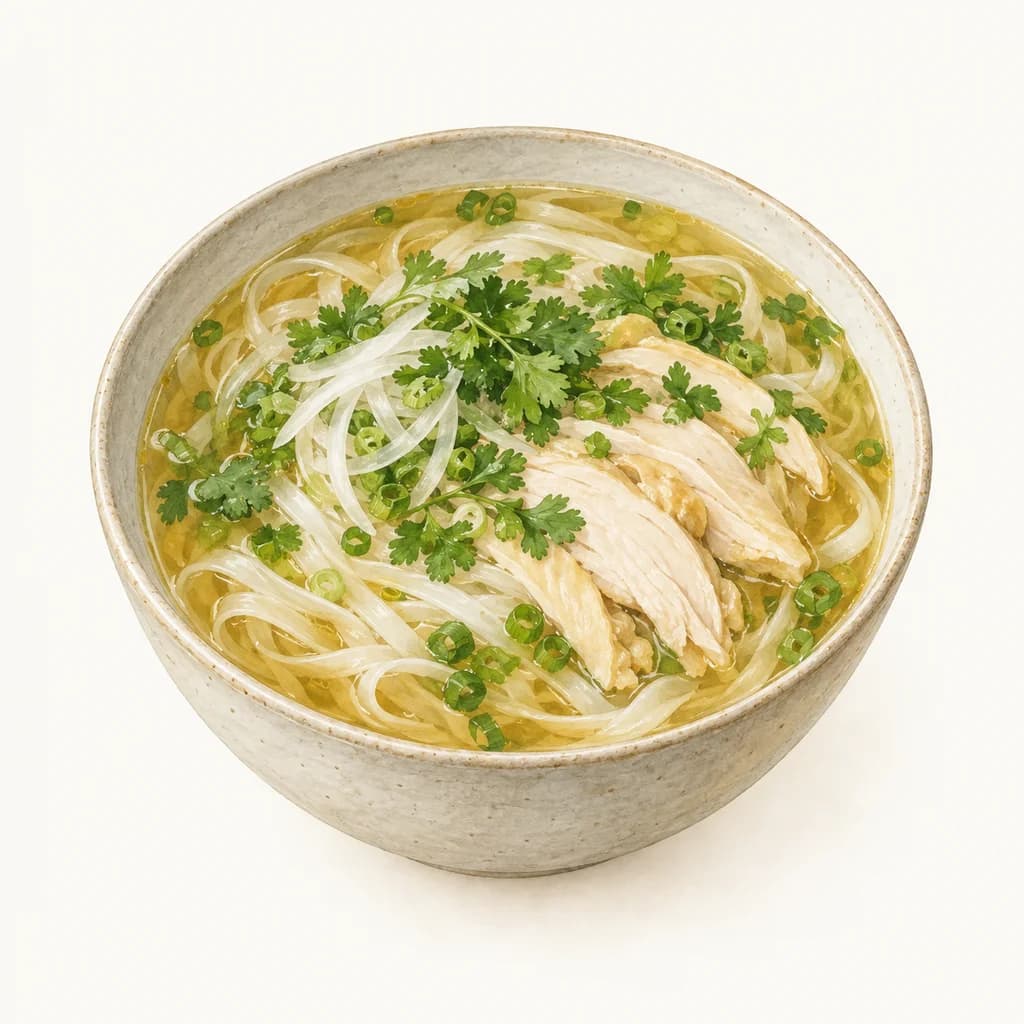
Choose flat rice noodles
For chicken pho, look for flat rice noodles labeled bánh phở. A narrow-to-medium width is convenient for soup, but availability varies. Check the ingredients and instructions rather than judging only from the front of the packet.
Round rice vermicelli, often labeled bún, makes a different texture. Wide noodles intended for stir-frying can work in soup but may need different handling. Start with a packet that explicitly includes soup preparation instructions.
Fresh and dried are different products
Dried noodles are shelf-stable until opened and easy to measure. Some need soaking before blanching; others cook directly in boiling water. Fresh noodles usually need less cooking but still vary by brand and how they have been stored.
Keep fresh noodles according to their label, watch the use-by date, and avoid packages with an unusual smell or visible spoilage. Fresh does not automatically mean ready to eat straight from the packet.
Use the packet as your timing guide
There is no one dependable cooking time for every noodle width and brand. Bring a separate pot of water to a boil, follow the packet, then taste a strand near the end. It should be pliable and tender without a hard center.
Stop a little short of very soft: the noodles will continue to soften in hot broth. For a new brand, cook a small portion first if you want to learn its texture before preparing a full dinner.
Keep starch out of the broth
Cook noodles separately rather than in the finished chicken stock. Their starch can make broth cloudy, and a full batch left in the pot keeps swelling as it sits.
Drain well. If the package recommends rinsing, do so; for immediate serving, a brief hot-water dip can warm rinsed noodles again. Avoid leaving them in cold water while the rest of the meal is finished.
Portion and assemble at the last moment
The flagship recipe uses 400 g dried noodles for six bowls, roughly 65–70 g per serving. Appetite and the amount of chicken will affect what feels right. Fresh noodle weights are not a direct one-for-one substitute because they contain more water.
Loosen noodles gently with tongs and divide them among bowls just before adding chicken and hot broth. Use warmed bowls if your noodles have cooled. A generous pour of broth should surround the noodles rather than barely cover a tightly packed mound.
Solve common texture problems
If noodles clump, loosen them briefly in hot water rather than pulling hard and breaking them. If they fall apart, they may have cooked too long or been stirred roughly. If the center is chalky or stiff, they need more cooking.
For leftovers, keep noodles separate from broth. Freshly cooked noodles give a better next-day bowl; if storing cooked noodles, chill promptly in a covered container and reheat thoroughly. Do not keep reheating the full batch for each individual serving.
Questions from the kitchen
Can I cook the noodles directly in the pho?
Separate cooking is better for broth clarity and portion control. Noodles held in the soup will absorb liquid and become soft.
How much fresh noodle replaces dried noodle?
Use the fresh noodle package’s serving guidance. Moisture content varies too much for a universal weight conversion.